
Compare
Statamic vs Drupal
Drupal is super-duper serious software. There’s a pretty good chance you don’t need all that.
Spoiler alert: neither is objectively “better.” We know, controversial.
01 · Framing
Drupal wins enterprise procurement. Statamic wins agency execution.
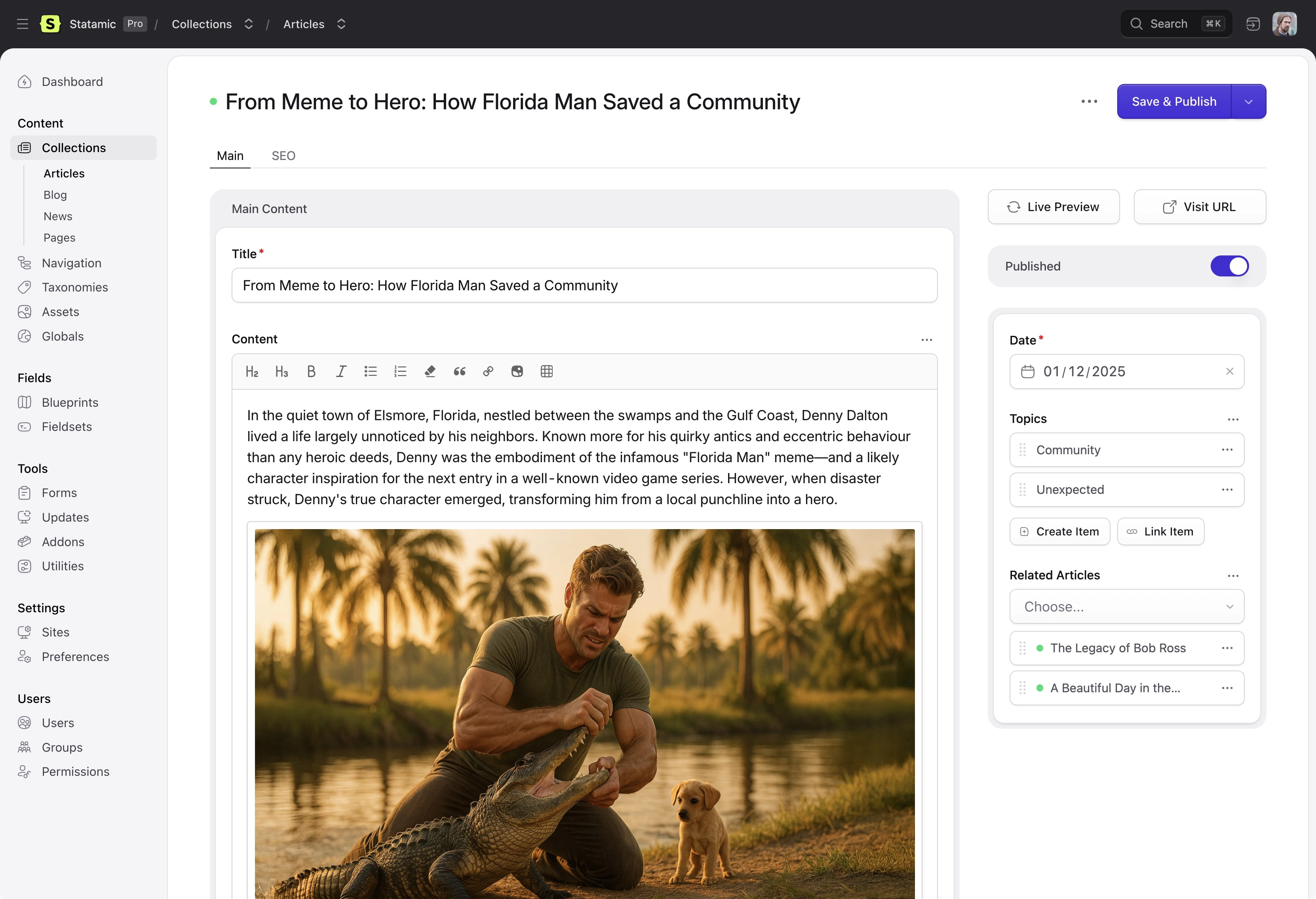
Let’s be fair: Drupal is still one of the most battle-tested enterprise CMS platforms around. Massive organizations and institutions run it for a reason.
But many teams choosing a CMS are not building a multilingual government portal with ultra-granular editorial permissions and 100k+ pages.
They’re building modern marketing sites and content products where velocity, maintainability, and developer happiness are the factors that matter most. That’s where Statamic wins hard.
02 · Developer experience
Developer experience isn’t even close.
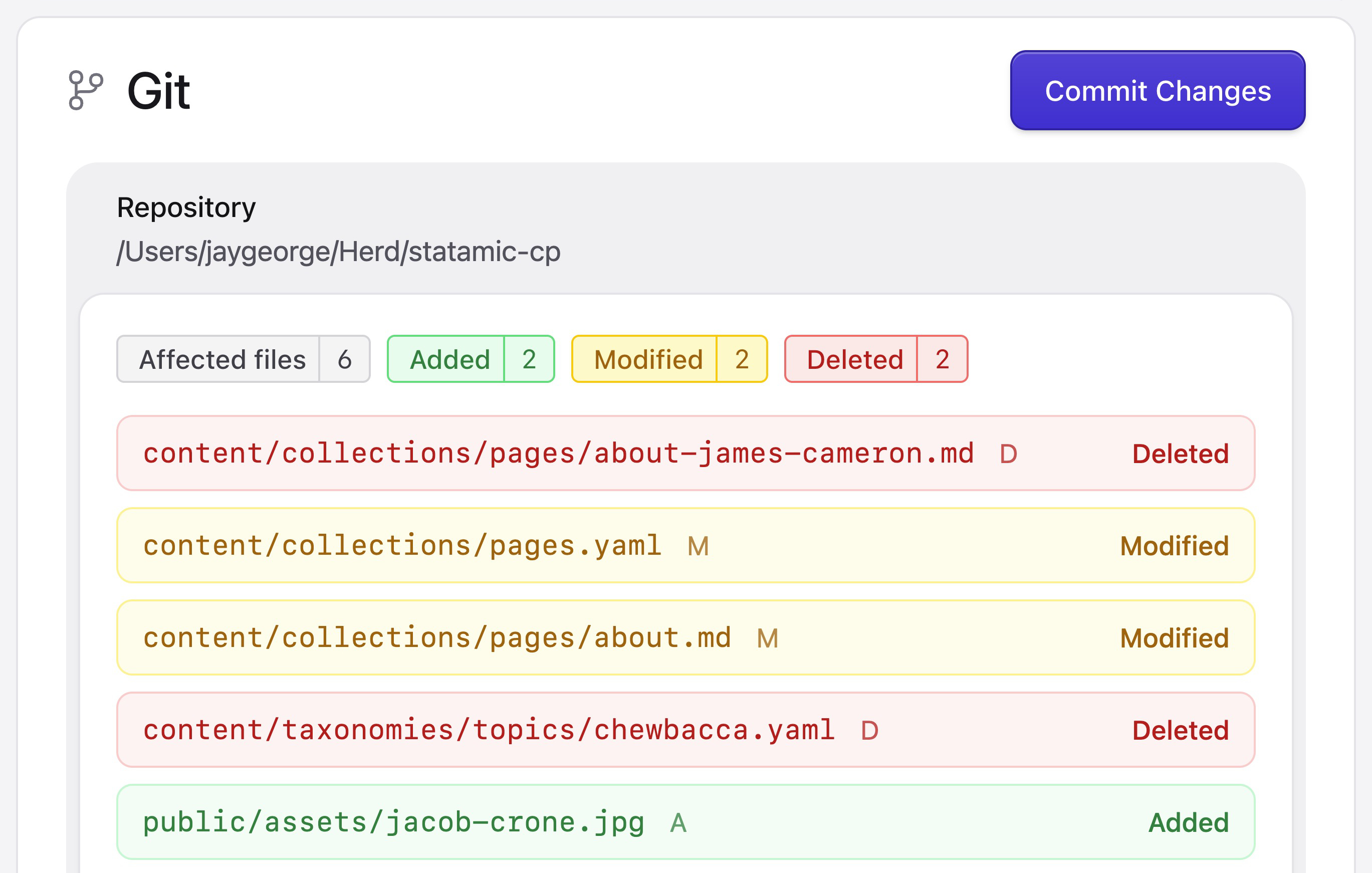
For most Laravel/PHP shops, Drupal’s learning curve is measured in months. Statamic is measured in hours or days because it’s Laravel-native, convention-driven, and meticulously designed for DX.
- Install as a Composer package in a standard Laravel app
- Build with tools your team already uses: Blade, Eloquent, Artisan, queues, Horizon, middleware, Spatie packages, and more
- Ship faster without fighting platform-level complexity
If your team inherited Drupal projects and every launch feels heavier than it should, this is the signal you’re probably over-platformed. Statamic is the fastest path to modern Laravel CMS delivery without cutting capability.
03 · Optional complexity
Scale when you need it. Complexity is optional.
Statamic’s architecture scales from simple to enterprise without forcing one workflow on every project.
- MySQL / Postgres for high-volume content operations
- Driver flexibility for evolving storage strategies
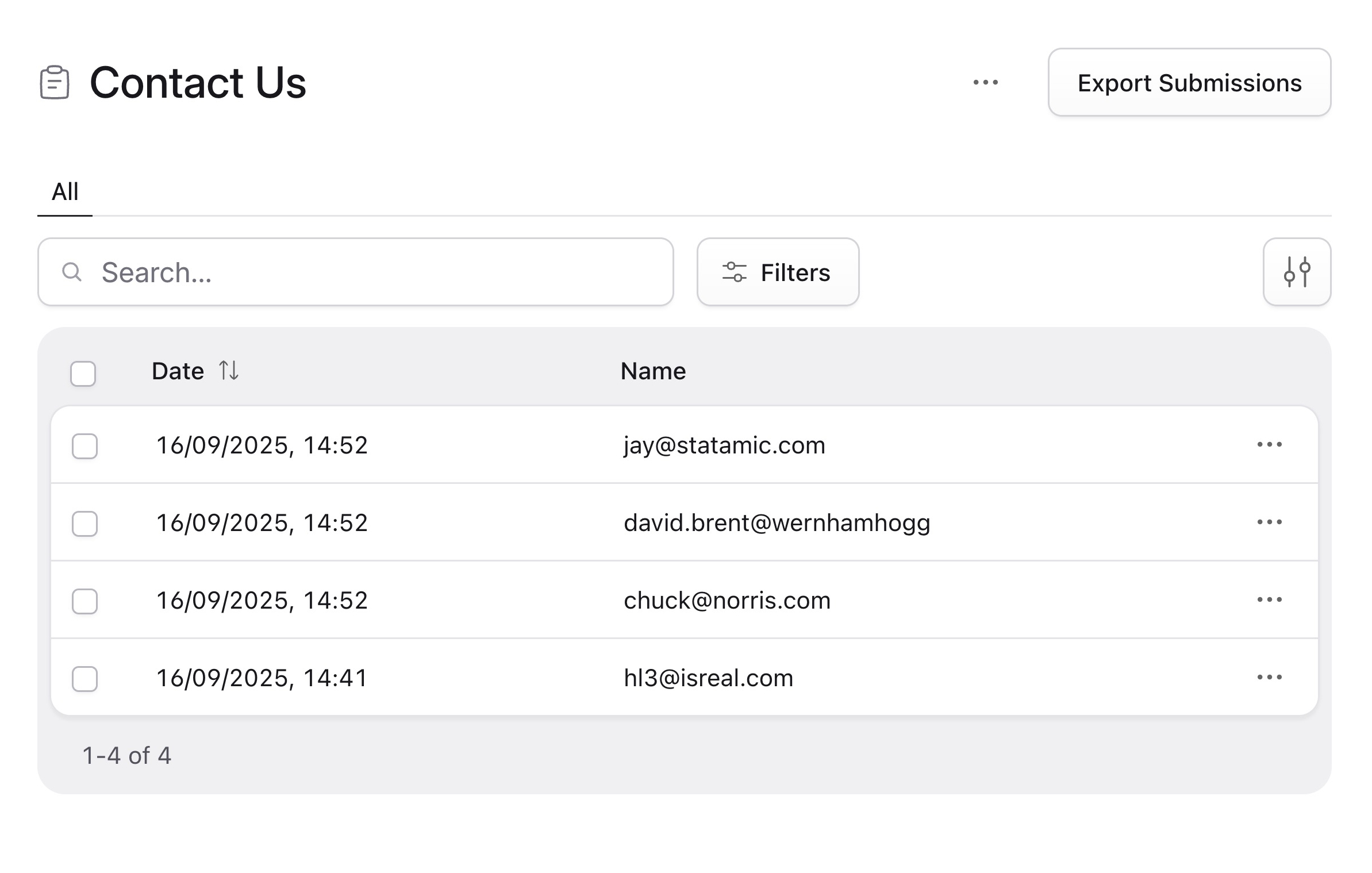
- Flat-file + Git workflows when teams want versioned content operations
Enterprise publishers like DER SPIEGEL and TV2 run Statamic in production. You can absolutely scale here — you just don’t pay the complexity tax upfront.
04 · Migration window
Why this moment matters for Drupal teams.
Drupal’s market share has been declining for years, and the Drupal 7 end-of-life cycle forced a lot of teams into rebuild decisions anyway.
One major migration report estimated roughly 35% of Drupal 7 sites moved to WordPress instead of modern Drupal (Pantheon migration analysis, 2025). That path makes sense on paper, but it often trades one kind of complexity for another (plugin bloat, editor/front-end developer friction, security concerns, and long-term maintenance pains).
When teams realize it’s a rebuild (not a painless upgrade), the better question becomes: if we’re rebuilding anyway, why keep the complexity tax? Statamic is the answer.
05 · Right fit
Who should migrate — and who probably shouldn’t.
Great fit for Statamic:
- Small-to-mid agencies with inherited Drupal projects
- Drupal 7 rebuilds where speed and maintainability matter
- Laravel shops that want a serious CMS without Drupal overhead
Probably stay on Drupal: government procurement projects, giant multilingual content estates, and extremely complex multi-role editorial governance.
This isn’t a “Drupal is bad” take. It’s just an opportunity to ask yourself “do I really need all this stuff?”

Jack Ellis Founder, Fathom Analytics
“I've used WordPress, Drupal and all the other PHP based CMS solutions. Statamic is by far my favourite. It's not even close. They have a fantastic ecosystem, documentation, and it's very fast.”

Can Statamic handle large content operations?
Yes. Statamic supports MySQL/Postgres and flexible data drivers for high-volume content environments. Teams like DER SPIEGEL and TV2 use Statamic in production at massive scale.
Should every Drupal site migrate?
Of course not. If you genuinely need Drupal’s deepest multilingual, governance, and enterprise permission capabilities, Drupal may still be the right fit. The strongest migration candidates are teams carrying complexity they don’t actually need.
What makes Statamic attractive to former Drupal teams?
Faster onboarding, faster release cycles, lower overhead, and a significantly cleaner and more intuitive developer/editor experience — while still keeping enterprise-friendly architecture options open. It’s the “serious CMS” feel without forcing enterprise-grade complexity into every project.
If we’re leaving Drupal, why not just choose WordPress?
WordPress is the obvious move for many teams, but it’s often a case of swapping one kind of pain for another: plugin dependency, long-term compatibility management, fractured content approaches, and editor workflow confusion. Statamic gives you comparable launch speed with cleaner architecture, strong Laravel-native DX, and far less plugin tax.
How does security compare?
Statamic has a smaller attack surface for typical projects, with built-in security features like 2FA, passkeys, elevated sessions, and modern Laravel security defaults. Drupal remains a mature enterprise platform, but often with heavier patch and module management overhead.